
You’ve seen the word everywhere. You’ve probably heard people say “content is king.”
But what does content marketing actually mean? Is it blogging? Social media? SEO?
If you’re asking those questions — you’re in the right place.
Content marketing has become a core pillar of how brands grow, connect, and sell today.
Companies like HubSpot, Atlassian, and Buffer are doubling down on it — and that says a lot.
Why?
Because content works.
It builds awareness, earns trust, generates leads — and yes, drives real revenue.
Let’s break it all down, step by step.
1. What is Content Marketing?
According to the Content Marketing Institute, one of the most respected sources in the field:
“Content marketing is a strategic marketing approach focused on creating and distributing valuable, relevant, and consistent content to attract and retain a clearly defined audience — and, ultimately, to drive profitable customer action.”
Let’s unpack that.
Content marketing ≠ just creating stuff.
It’s not about writing random blog posts or churning out daily Facebook captions.
It’s about doing three things well — consistently:
✅ Valuable
Would someone pay to read, watch, or listen to this?
Would they choose to spend 15 minutes on it over TikTok?
Think of content like Harvard Business Review or The New York Times — the kind people subscribe to.
That’s “value.”
✅ Relevant
If your content isn’t aligned with your audience’s needs or context — it won’t matter.
Relevance = showing up with the right message, at the right time, for the right person.
✅ Consistent
Random bursts don’t build brands.
Consistency in tone, publishing frequency, and style helps shape recognition and loyalty.
Good content helps. Great content builds trust.
And trust leads to long-term revenue.
Unlike ads that disappear the moment your budget runs out, content marketing compounds.
Each article, video, template, or guide is an asset that continues working for you.
🧠 Content ≠ Content Marketing
Let’s make this clear.
Content is everything:
A blog post, a Facebook caption, a billboard, a YouTube video, an email… even this sentence.
But content marketing is:
-
Strategic
-
Consistent
-
Audience-first
-
Goal-oriented
You can write without a plan. But you can’t “content market” without one.
2. Why Does Content Marketing Matter?
Let’s look at some numbers:
📊 90% of companies now use content in their marketing (Demand Metric)
📊 Content marketing generates 3x more leads than traditional ads
📊 It costs 62% less than traditional marketing
That’s not just a trend — that’s a shift.
Benefits of Content Marketing:
-
Brand awareness
Be there when your ideal audience is searching for help. -
Brand affinity
Become the go-to name in their mind for your category. -
Scalable reach with lower cost
One good piece can serve thousands — without paying again.
Think about it:
Most customer journeys go like this:
Awareness → Research → Consideration → Purchase
Content marketing helps with everything up to the sale.
By the time someone’s ready to buy, they already know, like, and trust you.
Personal Example:
I subscribed to Neil Patel’s blog years ago.
When I needed a keyword tool, I didn’t even Google. I just bought Ubersuggest — because I trusted him.
That’s what content marketing does.
3. Types of Content Marketing
You know the “why.” Now let’s talk “what.”
Content marketing isn’t one-size-fits-all. There are different formats depending on your goals, platform, and audience.
Here are the most common — and effective — types:
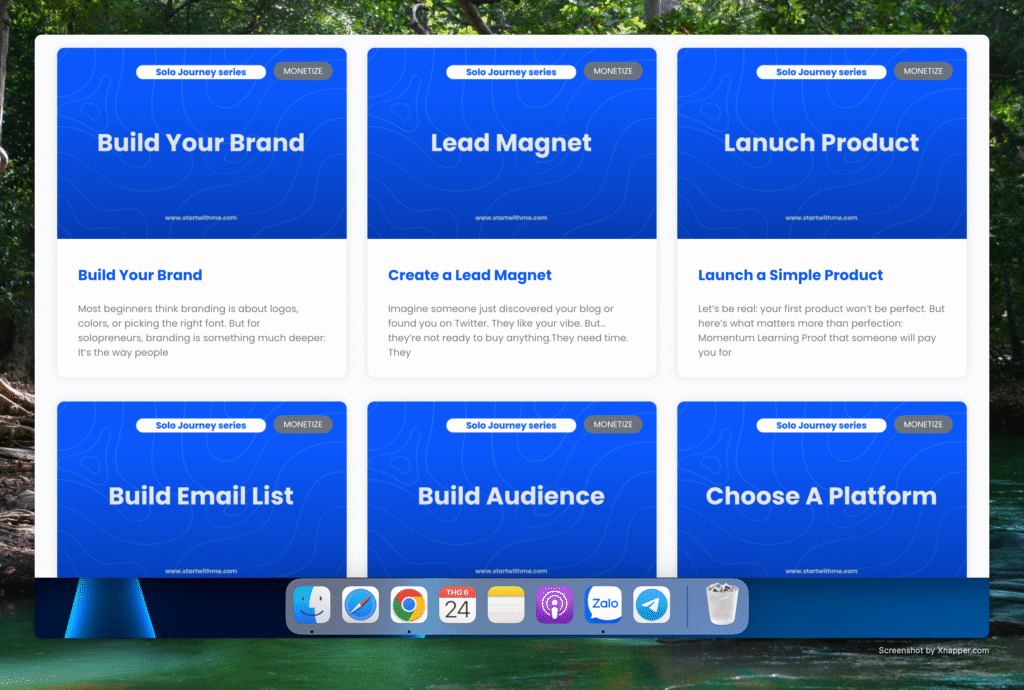
📘 Blog Posts
You’re reading one right now.
Blogging is one of the oldest and most reliable formats in content marketing.
It helps:
-
Drive organic search traffic
-
Educate your audience
-
Establish authority in your niche
🔎 A study from Backlinko found that the average top-ranking post on Google is ~1,890 words.
But content length should depend on your audience, not just SEO.
Example:
Hotjar, Backlinko, and Qualtrics produce excellent blog content — in-depth, honest, and practical.
At SWM, I follow the same philosophy: write what you’d want to read — and don’t fluff it up.
📗 Ebooks
Think of ebooks as blog posts… with more depth, structure, and lead generation power.
They’re commonly used as lead magnets — “Enter your email to download our free ebook.”
📌 Why it works:
People are more willing to give contact info in exchange for something valuable.
Pro tip: Your ebook should solve a real problem. Don’t just repackage blog posts.
📊 Case Studies
Case studies are real-world proof that your product/service works.
Use them to:
-
Tell customer success stories
-
Show outcomes (with data)
-
Build trust through storytelling
They’re perfect for B2B, consultants, coaches — or anyone selling transformation.
📝 Format:
Blog post, PDF, landing page — doesn’t matter. What matters is clarity and results.
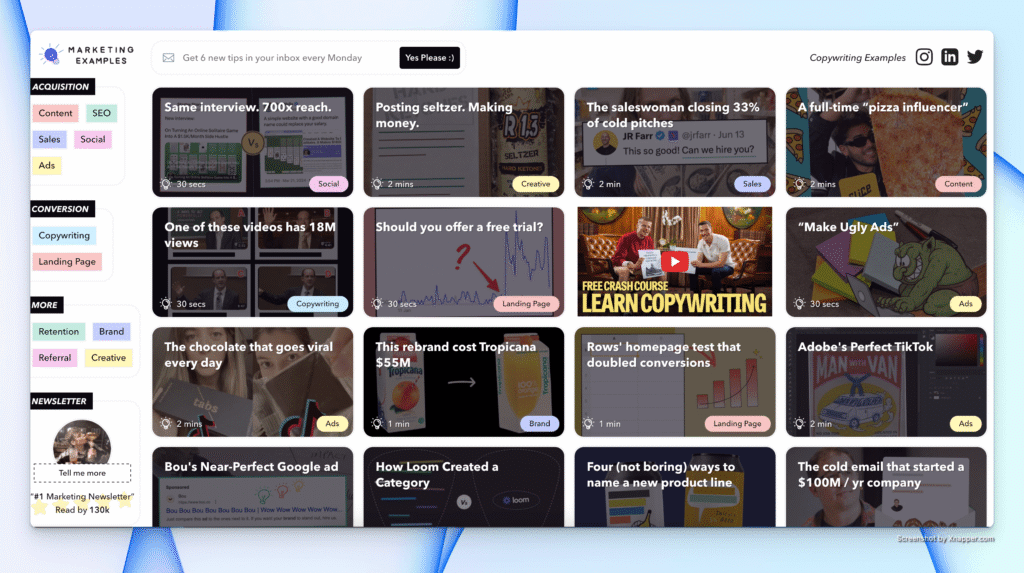
📎 Templates
Templates save time. That’s why people love them.
They’re pre-built resources that your audience can quickly customize — like:
-
A marketing calendar spreadsheet
-
A website copy template
-
A social media caption bank
Templates are high-value content because they solve problems fast.
At SWM, I often bundle templates with ebooks to boost engagement.
🧮 Free Tools
Want to create content that drives insane traffic?
Build a free tool.
Examples:
-
UTM builders
-
Budget calculators
-
AI content idea generators
These tools are:
-
Interactive
-
Shareable
-
Highly useful
They take time to build, but they have viral potential — and build backlinks like crazy.
🎥 Video
Video is the most engaging format right now — and the most resource-intensive.
But it’s worth it.
Why?
-
People retain more from video than text
-
It humanizes your brand
-
It performs well on all major platforms (especially TikTok, YouTube, and IG Reels)
📈 HubSpot reports that video is the most preferred content format among users.
🎬 Start small:
Try explainer videos, behind-the-scenes reels, or talking-head shorts.
🎧 Podcast
No time to write? Don’t like being on camera? Try podcasting.
Podcasts are:
-
Convenient for users (listen while driving, walking)
-
Great for long-form, deep-dive content
-
Powerful for brand authority
If you enjoy conversations, interviews, or storytelling — podcasting could be your lane.
🎙 Popular in Vietnam too (check out HIEU.TV, Tâm Lý Ơi, etc.)
4. How to Actually Do Content Marketing
Creating content isn’t hard.
Creating content that works — that’s the challenge.
And it starts with a strategy.
🔄 Content vs Content Strategy vs Content Marketing Strategy
| Term | Meaning |
|---|---|
| Content | Anything that communicates an idea |
| Content Strategy | What content your business needs and why |
| Content Marketing Strategy | A plan to use content to attract, engage, and convert your audience |
You need a strategy before execution.
Otherwise, you’re just publishing noise.
🛠 The 5-Step Content Marketing Process
-
Set Your Goals
→ Why are you creating content?
→ What does success look like?
Is it traffic? Sign-ups? Brand awareness? -
Define Your Audience
Know who you’re helping — their pain points, goals, language, and habits. -
Create a Content Plan
Map content to each stage of the buyer journey.
→ Awareness: blog, social, video
→ Consideration: ebook, email series, webinar
→ Decision: case studies, testimonials, demos -
Develop Your Content
Tell stories. Share your POV. Solve real problems.
Make it unique — no one remembers bland. -
Distribute Smartly
Use channels where your audience lives.
Repurpose across platforms. Track performance.
📌 Content marketing = content + system + consistency.
5. How to Learn Content Marketing
Let’s be real — you can’t “learn it all” in a week.
But you can absolutely get started today.
🎯 Start with Self-Reflection:
Ask yourself:
-
Why do I want to learn content marketing?
-
Do I prefer writing or speaking?
-
Where do I want to be 1–3–5 years from now?
Clarity helps you choose the right format and pace.
📚 Books to Read:
-
Epic Content Marketing – Joe Pulizzi
-
Inbound Content – Justin Champion
-
Content Marketing For Dummies – Susan Gunelius
-
Content Marketing in the Experience Economy – Randy Frisch
-
The Adweek Copywriting Handbook (aka Khiêu Vũ Với Ngòi Bút) – Joseph Sugarman
🎓 Free Courses to Take:
🧠 Blogs to Follow:
-
Content Marketing Institute
-
Copyblogger
-
Contently
-
Convince & Convert
-
Orbit Media
-
Rock Content
But remember — reading ≠ mastering.
You learn by doing.
Start a blog. Write a post. Create a video. Test. Tweak. Repeat.
Frequently Asked Questions
Q: What’s the difference between content and content marketing?
A: Content = the message. Content marketing = the strategy to use that message for growth.
Q: Is content marketing only for big businesses?
A: No. Solopreneurs, freelancers, local shops — everyone can benefit.
Q: Do I need to be a good writer?
A: Not necessarily. Choose a format that suits you — video, audio, design… or collaborate.
Final Thoughts: Start Where You Are
You don’t need to be Neil Patel or Buffer to succeed at content marketing.
You just need:
-
A voice
-
A message
-
A plan
Start with a blog post.
Or a podcast episode.
Or a template your audience will love.
Then build from there — brick by brick.
🎯 In a crowded world, the best story wins.
So tell yours well.
Next step: Search Engine Optimization
[…] Content writing […]
[…] Next step: Learn Content Marketing […]